f you live along the scenic waterfront of Scenic Drive, down in Timber Ridge, or out toward Henderson Point, you know that a roof in Pass Christian, Mississippi, has to work twice as hard as a roof anywhere else. Between the brutal humidity of the Mississippi Sound, relentless salt air, and the ever-present threat of hurricane-force winds, choosing the right shingle isn’t just a matter of curb appeal—it’s a matter of structural survival.
When local homeowners face a roof replacement in Pass Christian, the first major decision is usually: Should I install standard 3-tab shingles, or upgrade to architectural shingles?
💡 Before any decision, smart homeowners start with a professional roof inspection Pass Christian MS crews can document—so you know exactly what your deck and existing shingles are working with.
Let’s break down the technical differences between these two options, look at how they perform in coastal storm zones, and explain why one of them can unlock massive savings on your wind insurance premiums.
The Technical Breakdown: Anatomy of a Shingle
To understand why these two materials perform so differently during a Gulf Coast storm, you have to look at how they are manufactured.
1. Standard Shingles (3-Tab)
Standard asphalt shingles are often called 3-tab shingles because they are manufactured as a single, flat layer of fiberglass mat coated with asphalt, then cut into three uniform tabs.
- Appearance: Flat, uniform, slate-like grid pattern.
- Weight: Lightweight, which makes them less resilient against physical lifting forces.
- The Coastal Flaw: Because they are thin and light, high winds can easily catch the edges of the tabs. Once a single tab lifts, the wind can unzip entire sections of the roof.
2. Architectural Shingles (Dimensional / Laminate)
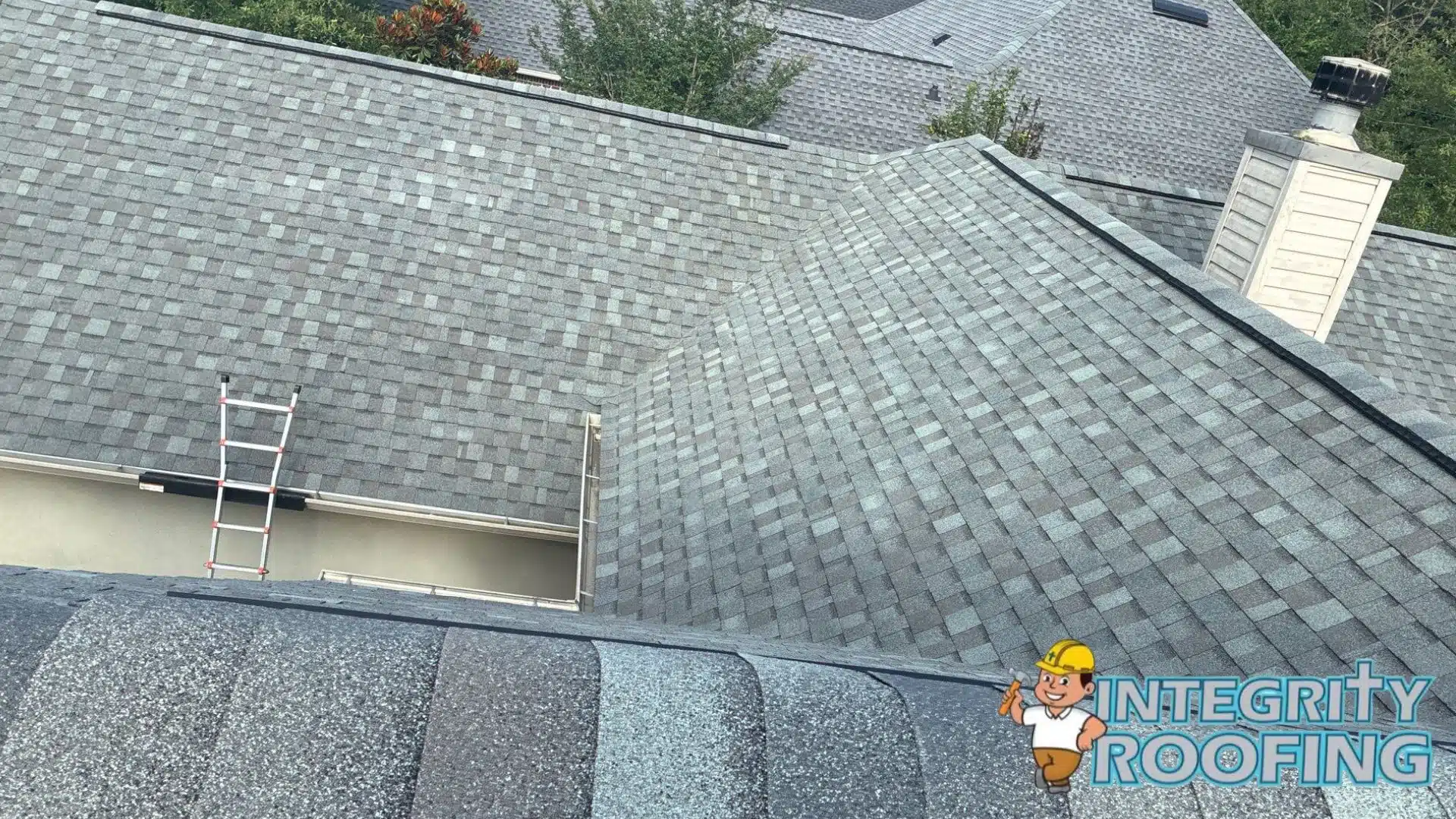
Architectural shingles—often called dimensional or laminated shingles—are engineered using two or more layers of fiberglass mat bonded together with a premium, weather-grade asphalt sealant.
- Appearance: Rich, multi-dimensional, textured look that mimics natural wood shakes or slate.
- Weight: Roughly 50% heavier than 3-tab options, providing massive structural resistance to wind uplift.
- The Coastal Benefit: No individual tabs to catch the wind. Instead, they form a heavy, laminated armor layer across your roof deck—exactly what experienced roofers Pass Christian MS homeowners trust recommend for storm country.
Architectural vs. Standard Shingles at a Glance
| Feature | Standard 3-Tab Shingles | Architectural Shingles |
| Wind Resistance Rating | Up to 60 mph | 110 mph to 130 mph+ |
| Average Lifespan (Coastal) | 10 to 15 years | 25 to 30+ years |
| Material Thickness | Single layer (Flat) | Multi-layered (Dimensional) |
| Algae/Salt Resistance | Basic | Advanced (Often copper-infused) |
| FORTIFIED Roof™ Eligible | No | Yes |
The Wind Test: Why WindGUARD and 130 MPH Ratings Matter
In Harrison County, building codes are strict for a reason. Standard 3-tab shingles are generally rated to withstand winds only up to 60 mph. A severe afternoon thunderstorm rolling across the bay can generate straight-line winds that easily exceed that threshold.
Premium architectural lines—like the GAF Timberline series or TAMKO Heritage Pro-Line with built-in wind warranties—are tested to survive 110 to 130 mph. When a proper roof installation Pass Christian MS crew uses high-wind nailing patterns (six nails per shingle instead of the standard four), wind resistance can top 150 mph—equivalent to a Category 4 hurricane.
Pass Christian Reality Check: Tearing off old shingles down to the bare wood deck allows a certified roofing crew to re-nail the decking directly to your rafters. This prevents the entire roof deck from lifting off the house when pressure drops during a major tropical system.
The Secret Weapon: Unlocking Insurance Discounts via the FORTIFIED Standard
Along the Mississippi Gulf Coast, your choice of shingle dictates your eligibility for the Insurance Institute for Business & Home Safety (IBHS) FORTIFIED Roof™ designation.
Standard 3-tab shingles cannot be used to achieve a FORTIFIED designation. Architectural shingles are mandatory because the system requires a heavyweight, high-wind rated layer paired with a sealed roof deck (a secondary water barrier that keeps water out even if shingles are blown away).
Furthermore, under the newly updated Strengthen Mississippi Homes Act (SB 2409) administered by the Mississippi Insurance Department, state law mandates that insurance carriers provide significant premium credits to homeowners who upgrade and certify their roofs to these strict standards. Homeowners can also look into state-backed mitigation lottery grants of up to $10,000 to offset these exact protective upgrades.
- IBHS FORTIFIED Roof™ Certification: Earns a minimum of 20% to 35% off the windstorm portion of your homeowners insurance premium.
- Advanced Mitigation Tiers (Silver/Gold): Can slash your wind insurance premiums by up to 40% to 55% depending on your carrier.
Over the lifespan of your roof, the insurance savings alone will often completely pay for the upfront cost difference of upgrading to a premium architectural system.
The Long-Term Verdict for Pass Christian Homeowners
Standard 3-tab shingles carry a lower sticker price, but in a coastal zone they’re a high-risk gamble. Shorter lifespans under the hot Mississippi sun, vulnerability to salt-air degradation, and low wind tolerance mean they usually cost more over time—in repairs, early replacement, and higher premiums.
Architectural shingles give you a beautifully textured, heavy-duty shield that keeps your home dry, raises your property value, and puts money back in your pocket through lower insurance bills. That’s why a properly engineered roof replacement Pass Christian MS homeowners invest in almost always pays for itself.
Preparing for a project? Here are your next steps:
- Schedule a documented roof inspection Pass Christian MS homeowners can submit to their insurer.
- Review the step-by-step FORTIFIED Roof installation process.
- Learn how to document a roof insurance claim after a Gulf Coast storm.
Frequently Asked Questions (FAQ)
What is a FORTIFIED Roof system, and why is it recommended for coastal Mississippi?
A FORTIFIED Roof is a superior build standard developed by the IBHS to withstand winds up to 130 mph through sealed roof decks and enhanced ring-shank nailing patterns. It is highly recommended in Pass Christian to prevent catastrophic wind-driven water intrusion during tropical systems.
Does a FORTIFIED Roof designation reduce homeowners insurance rates in Mississippi?
Yes, Mississippi law requires insurance providers to offer mandatory premium discounts to homeowners who secure an official IBHS FORTIFIED designation. These savings frequently reduce windstorm premiums significantly, allowing the upgrade to pay for itself over time.
Is a metal roof or an architectural shingle roof better for high-wind coastal zones?
Metal roofs provide superior wind resistance up to 140+ mph and have longer structural lifespans, but require higher initial capital layout. Architectural shingles built to FORTIFIED configurations deliver exceptional, budget-friendly high-wind performance that satisfies strict coastal building mandates.
How long does a full residential roof replacement take in Pass Christian?
The physical tear-off and installation phase for a standard single-family home typically takes 1 to 2 days. However, if structural decking repair or explicit third-party IBHS FORTIFIED verification checks are required, the process may extend by an extra day.
Do local roofers in Pass Christian provide emergency tarping services after a storm?
Yes, top local roofing contractors offer 24/7 emergency response pipelines to rapidly deploy heavy-duty tarps over exposed structural framing. This fast action prevents immediate interior water damage while you wait for your full insurance adjuster assessment.
{ “@context”: “https://schema.org”, “@type”: “FAQPage”, “mainEntity”: [ { “@type”: “Question”, “name”: “What is a FORTIFIED Roof system, and why is it recommended for coastal Mississippi?”, “acceptedAnswer”: { “@type”: “Answer”, “text”: “A FORTIFIED Roof is a superior build standard developed by the IBHS to withstand winds up to 130 mph through sealed roof decks and enhanced ring-shank nailing patterns. It is highly recommended in Pass Christian to prevent catastrophic wind-driven water intrusion during tropical systems.” } }, { “@type”: “Question”, “name”: “Does a FORTIFIED Roof designation reduce homeowners insurance rates in Mississippi?”, “acceptedAnswer”: { “@type”: “Answer”, “text”: “Yes, Mississippi law requires insurance providers to offer mandatory premium discounts to homeowners who secure an official IBHS FORTIFIED designation. These savings frequently reduce windstorm premiums significantly, allowing the upgrade to pay for itself over time.” } }, { “@type”: “Question”, “name”: “Is a metal roof or an architectural shingle roof better for high-wind coastal zones?”, “acceptedAnswer”: { “@type”: “Answer”, “text”: “Metal roofs provide superior wind resistance up to 140+ mph and have longer structural lifespans, but require higher initial capital layout. Architectural shingles built to FORTIFIED configurations deliver exceptional, budget-friendly high-wind performance that satisfies strict coastal building mandates.” } }, { “@type”: “Question”, “name”: “How long does a full residential roof replacement take in Pass Christian?”, “acceptedAnswer”: { “@type”: “Answer”, “text”: “The physical tear-off and installation phase for a standard single-family home typically takes 1 to 2 days. However, if structural decking repair or explicit third-party IBHS FORTIFIED verification checks are required, the process may extend by an extra day.” } }, { “@type”: “Question”, “name”: “Do local roofers in Pass Christian provide emergency tarping services after a storm?”, “acceptedAnswer”: { “@type”: “Answer”, “text”: “Yes, top local roofing contractors offer 24/7 emergency response pipelines to rapidly deploy heavy-duty tarps over exposed structural framing. This fast action prevents immediate interior water damage while you wait for your full insurance adjuster assessment.” } } ] }