

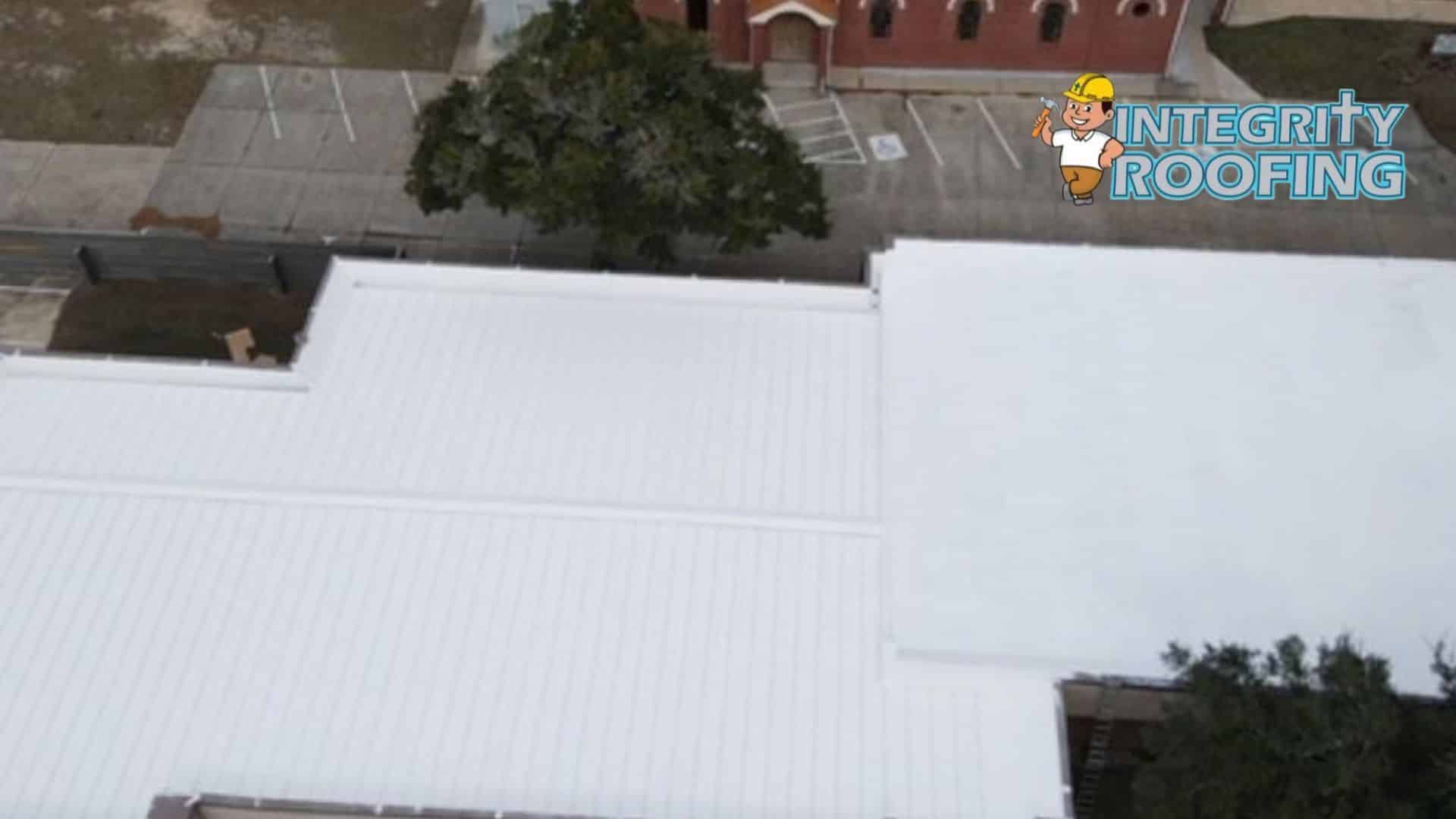
A roof coating can be one of the most practical ways to protect a low-slope commercial roof or certain residential roof surfaces along the Mississippi Gulf Coast. But the coating is not a one-and-done purchase. This roof coating maintenance guide explains what local property owners should watch for before Gulf Coast sun, humidity, standing water, and tropical weather turn a small surface concern into water intrusion.
At Integrity Roofing, we see the difference regular attention makes. A clean, properly maintained coating can help manage heat, shed water, and extend the useful service life of the existing roof assembly. Neglect allows dirt, algae, debris, and moisture to compromise the very surface meant to protect the building.
Why Gulf Coast Roof Coatings Need Attention
Our climate is hard on every roof system. Intense UV exposure can dry and weather a coating, while torrential summer downpours test every drain, seam, penetration, and edge detail.
High humidity also means surfaces stay damp longer after rain. On properties under heavy pine canopy, especially around Diamondhead, Kiln, Bay St. Louis, and Waveland, shade and falling needles create ideal conditions for algae and mold growth.
A coating cannot perform as designed if water cannot drain away or if debris is holding moisture against its surface. Hurricane-season winds add another concern: loose materials and clogged drains can turn ordinary rainwater into a major problem fast.
Start With the Right Maintenance Schedule
For most Gulf Coast coated roofs, plan a professional inspection at least twice a year: once before hurricane season and once after it. Commercial property owners may need more frequent checks when the roof has rooftop equipment, large drainage areas, nearby trees, or recurring ponding water.
Homeowners should also look over the roof from the ground after significant storms. Do not walk on a coated roof unless it was designed for foot traffic and you know how to move across it without scuffing or puncturing the surface.
Your routine should include these checkpoints:
- A spring inspection before the heaviest summer rain and tropical weather arrive
- A post-storm inspection after high winds, driving rain, or hail
- A fall cleanup after pine needles, leaves, and seed pods accumulate
- A winter check for drainage issues, staining, and moisture around roof edges
The calendar matters, but conditions matter more. If water is visible on the roof more than 48 hours after a normal rain event, schedule an assessment promptly.
Keep Drains, Scuppers, and Gutters Clear
Drainage is the foundation of coating maintenance. Coatings are made to resist weather, but prolonged standing water can stress many systems and expose weak spots around seams, drains, and flashing.
Clear leaves, pine needles, branches, and sediment from roof drains, scuppers, gutters, and downspouts. On commercial roofs, check strainers and drain bowls for buildup. On homes, make sure gutters are secured and channeling water away from the structure.
Never use sharp tools to scrape debris off a coated surface. A soft broom, blower used carefully, or low-pressure rinse is usually safer. High-pressure washing can cut into a coating, force water into vulnerable details, or remove protective granules from adjacent surfaces.
Watch for These Early Warning Signs
A coating rarely fails without leaving clues. The goal is to spot those clues while the affected area is still limited and before moisture reaches the roof deck or interior.
During a visual check, look for:
- Blisters, bubbling, cracking, peeling, or thin-looking areas
- Chalky residue that rubs off excessively on a gloved hand
- Open seams or separation around vents, curbs, pipes, drains, and roof edges
- Stains, algae streaks, mold growth, or persistent dirt tracks near drainage paths
- Ponding water, soft spots, or debris piles that keep an area wet
- Interior ceiling stains, musty odors, or moisture around exterior walls
Some discoloration is cosmetic. Some indicates a drainage problem, trapped moisture, or a coating that is losing thickness. A qualified roofing professional can tell the difference without guessing.
Clean Carefully, Especially Under Trees
Cleaning is about preserving the coating, not making the roof look brand new. Gulf Coast roofs collect pollen, salt-laden moisture, bird droppings, pine debris, and airborne grime that can reduce reflectivity and encourage biological growth.
Use only cleaning products approved for the specific coating type. A solution that is safe for one acrylic, silicone, polyurethane, or asphalt-based system may not be right for another. Avoid harsh solvents and unapproved bleach mixtures, which can discolor or weaken some coatings.
For homes along wooded fairways in Diamondhead, cleanup may need to happen more often than the standard twice-yearly schedule. That extra attention also helps maintain the neat appearance expected in communities with architectural guidelines and neighborhood covenants.
Protect Roof Details, Not Just Open Areas
The open field of the roof gets most of the attention, but details are where weather often finds a path inside. Pipes, curbs, transitions, parapet walls, edge metal, skylight surrounds, and drainage points deserve close review.
Wind-driven rain is common from Pass Christian to Ocean Springs. A coating system must work with sound flashing, compatible sealants, and a properly prepared substrate. Coating over an underlying problem is not a maintenance plan.
For buildings that use standing seam metal, check fasteners, seams, panel transitions, and areas where dissimilar materials meet. For properties with algae-resistant architectural asphalt shingles, coatings are not typically the right treatment, but the same principles still apply: keep drainage clear, control debris, and maintain proper attic ventilation.
Document What You Find
Take dated photos during each inspection, especially before and after storms. Photograph drains, roof edges, penetrations, areas of discoloration, and any standing water.
This simple record helps identify patterns. It can also support conversations with your insurer when a named storm causes visible damage, and it gives your roofing contractor a clearer picture of how conditions have changed over time.
Commercial owners should keep maintenance logs with inspection dates, weather events, cleaning performed, and notes about each area observed. That record is useful for budgeting and for protecting warranty eligibility when the coating manufacturer requires documented care.
When to Call a Roofing Professional
Call for a professional assessment when you see active interior moisture, widespread bubbling, open seams, recurring ponding water, sudden coating loss, or storm-related changes. Do not wait for a small stain to become a larger building issue.
A reputable roofing contractor should inspect the complete roof system, explain what was found in plain language, and provide a straightforward scope of work. You should understand whether the roof needs cleaning, targeted recoating, drainage correction, or a broader evaluation before approving anything.
Frequently Asked Questions
How often should a roof coating be maintained?
Most coated roofs should be professionally inspected twice each year and after major storms. Gulf Coast properties with heavy tree cover, rooftop equipment, or drainage concerns may need more frequent attention.
Can I pressure wash a roof coating?
Usually, no. High-pressure washing can damage the coating or force water into vulnerable roof details. Use manufacturer-approved cleaning methods and let a roofing professional advise you on the right approach for your coating type.
What is the biggest threat to a roof coating in Mississippi?
Standing water and prolonged moisture are among the biggest threats because they stress the coating and encourage algae growth. Intense UV, hurricane winds, pine debris, and heavy rainfall add to the wear Gulf Coast roofs face.
How do I know if my roof coating needs attention?
Look for cracking, blistering, peeling, excessive chalking, open seams, algae growth, ponding water, or interior moisture signs. Prompt inspection gives you the best chance to address the cause before it affects more of the roof system.
Does a roof coating help with energy costs?
A reflective coating can reduce roof-surface heat absorption and may help lower cooling demand, depending on the building, insulation, HVAC system, and coating color. It is not a substitute for proper insulation, ventilation, and drainage.
Is roof coating maintenance worth it?
Yes, when the coating is compatible with the roof and maintained on schedule. A few careful inspections and cleanings each year can protect your property, preserve appearance, and keep small warning signs from becoming stressful surprises.